10 Best Penetrating Oils
From leading brands and best sellers available on the web.By clicking on a link to a third party's website, log data is shared with that third party.
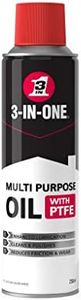
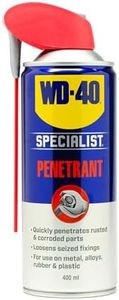
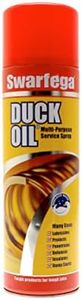
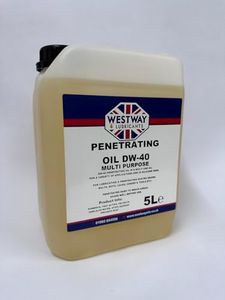
Related Products
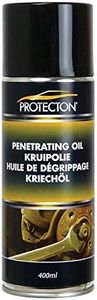
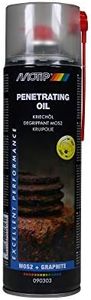
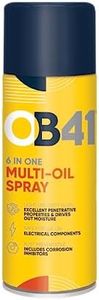


Buying Guide for the Best Penetrating Oils
When selecting a penetrating oil, it's important to understand that these products are designed to loosen rusted or stuck parts, lubricate, and protect against corrosion. The right choice depends on the specific application you have in mind, such as automotive repair, household maintenance, or industrial use. Consider the environment in which you'll be using the oil, as well as any specific requirements like odor or toxicity. Understanding the key specifications will help you make an informed decision that best suits your needs.ViscosityViscosity refers to the thickness of the oil and its ability to flow. In penetrating oils, a lower viscosity is generally preferred because it allows the oil to seep into tight spaces and loosen rusted or stuck parts more effectively. If you're dealing with very tight or small spaces, opt for a penetrating oil with low viscosity. For general use, a medium viscosity might be sufficient, providing a balance between penetration and lubrication.
Corrosion ProtectionCorrosion protection is the ability of the oil to prevent rust and corrosion on metal surfaces. This is important if you want to not only loosen parts but also protect them from future rusting. If you're using the oil in a humid or corrosive environment, look for products that offer strong corrosion protection. For indoor or less harsh environments, moderate protection might be adequate.
LubricationLubrication refers to the oil's ability to reduce friction between moving parts. This is crucial if the parts you're working on need to move smoothly after being loosened. If lubrication is a priority, choose a penetrating oil that specifically mentions enhanced lubrication properties. For applications where lubrication is less critical, a standard penetrating oil will suffice.
Drying TimeDrying time is how quickly the oil evaporates or dries after application. A faster drying time is beneficial if you need to use the parts soon after application, as it reduces downtime. However, if you need the oil to remain on the surface for longer to provide ongoing lubrication or protection, a slower drying time might be more appropriate. Consider your project's timeline when evaluating this spec.
OdorOdor is the smell emitted by the oil during and after application. This can be an important factor if you're sensitive to strong smells or if you'll be using the oil in enclosed spaces. Some penetrating oils are formulated to be low-odor or odorless, which can be more pleasant to use indoors. If odor is not a concern, you can focus on other performance aspects.
ToxicityToxicity refers to the potential health risks associated with exposure to the oil. This is particularly important if you'll be using the oil frequently or in areas where food is prepared. Look for products that are labeled as non-toxic or environmentally friendly if safety is a priority. For occasional use in well-ventilated areas, standard formulations may be acceptable.