10 Best Houseplant Fertilisers
From leading brands and best sellers available on the web.By clicking on a link to a third party's website, log data is shared with that third party.
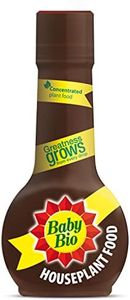
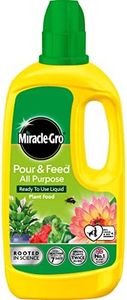
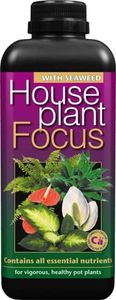
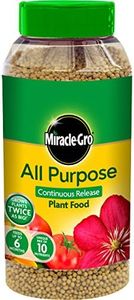
Related Products
Up to 20% off



Buying Guide for the Best Houseplant Fertilisers
Choosing the right houseplant fertilizer is essential for the health and growth of your indoor plants. Fertilizers provide essential nutrients that plants need to thrive, especially when grown in containers where soil nutrients can become depleted over time. Understanding the key specifications of fertilizers will help you select the best one for your specific plants and their needs.N-P-K RatioThe N-P-K ratio represents the percentage of nitrogen (N), phosphorus (P), and potassium (K) in the fertilizer. Nitrogen promotes leafy growth, phosphorus supports root development and flowering, and potassium enhances overall plant health. For leafy plants, a higher nitrogen ratio (e.g., 10-5-5) is beneficial. For flowering plants, a balanced or higher phosphorus ratio (e.g., 5-10-5) is ideal. Choose a fertilizer with an N-P-K ratio that matches the specific needs of your plants.
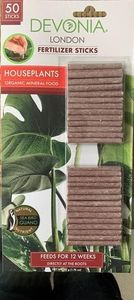
Type of FertilizerFertilizers come in various forms, including liquid, granular, and slow-release. Liquid fertilizers are fast-acting and easy to apply, making them suitable for regular feeding. Granular fertilizers are sprinkled on the soil and provide nutrients over time. Slow-release fertilizers gradually release nutrients over several months, reducing the frequency of application. Consider your convenience and the specific needs of your plants when choosing the type of fertilizer.
Organic vs. SyntheticOrganic fertilizers are made from natural sources such as compost, manure, and bone meal, and they improve soil health over time. Synthetic fertilizers are chemically formulated and provide immediate nutrient availability. Organic fertilizers are ideal for those who prefer natural gardening practices and want to enhance soil quality. Synthetic fertilizers are suitable for quick nutrient boosts and precise nutrient control. Decide based on your gardening philosophy and the immediate needs of your plants.
MicronutrientsIn addition to the primary nutrients (N-P-K), plants also require micronutrients like iron, manganese, zinc, and copper for optimal growth. Some fertilizers include these micronutrients, which can be especially important for preventing deficiencies in container-grown plants. If your plants show signs of nutrient deficiencies (e.g., yellowing leaves, stunted growth), choose a fertilizer that includes a broad spectrum of micronutrients.
Application FrequencyDifferent fertilizers have varying application frequencies, ranging from weekly to every few months. Liquid fertilizers often require more frequent application, while slow-release fertilizers can last for several months. Consider your schedule and how often you are willing to fertilize your plants. If you prefer less frequent maintenance, a slow-release fertilizer might be the best option.
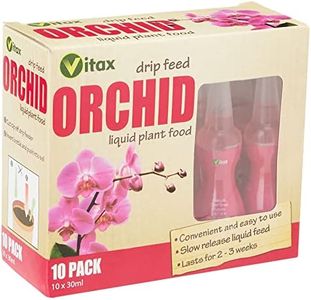
Plant-Specific FormulasSome fertilizers are formulated specifically for certain types of plants, such as succulents, orchids, or African violets. These specialized formulas cater to the unique nutrient requirements of specific plant types. If you have a collection of a particular type of plant, using a plant-specific fertilizer can help ensure they receive the optimal nutrients for their growth and health.