10 Best Heavy Duty Shredders
From leading brands and best sellers available on the web.By clicking on a link to a third party's website, log data is shared with that third party.

Related Products
Up to 26% off
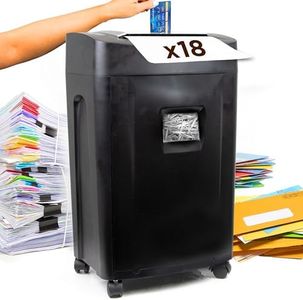
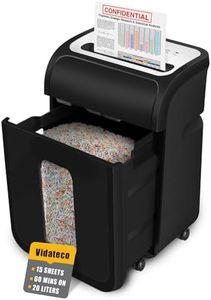
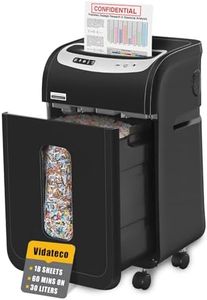
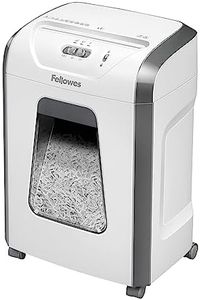
Recommended lists

Top rated
Shredders
Buying Guide for the Best Heavy Duty Shredders
When selecting a heavy-duty shredder, it's important to consider the volume and type of materials you need to shred, as well as the security level required for your documents. Heavy-duty shredders are designed to handle large volumes of paper and other materials, making them ideal for offices or businesses with high shredding needs. Understanding the key specifications will help you choose a shredder that meets your specific requirements, ensuring efficiency and security.Sheet CapacitySheet capacity refers to the number of sheets a shredder can handle at once. This is important because it determines how quickly you can shred documents. Shredders with a low sheet capacity (10-20 sheets) are suitable for small offices or personal use, while those with a medium capacity (20-50 sheets) are better for moderate use. High-capacity shredders (50+ sheets) are ideal for large offices or businesses with significant shredding needs. Consider your typical shredding volume to choose the right capacity.
Run Time and Cool Down TimeRun time is the duration a shredder can operate continuously before needing to cool down, while cool down time is the period it requires to rest before it can be used again. This is crucial for efficiency, especially in busy environments. Shredders with short run times (5-10 minutes) and long cool down times (20-30 minutes) are suitable for occasional use. For frequent shredding, look for models with longer run times (30+ minutes) and shorter cool down periods. Match these specs to your shredding frequency.
Security LevelSecurity level indicates the size of the shred particles and the level of confidentiality they provide. This is vital for protecting sensitive information. Lower security levels (P-1 to P-3) produce larger strips or cross-cuts, suitable for non-sensitive documents. Medium security (P-4) offers smaller cross-cuts, ideal for confidential documents. High security (P-5 to P-7) provides micro-cuts or particle cuts, necessary for highly sensitive or classified information. Choose based on the confidentiality of your documents.
Bin CapacityBin capacity refers to the volume of shredded material the shredder can hold. This affects how often you need to empty the bin, impacting convenience and efficiency. Small bins (up to 10 gallons) are suitable for personal or small office use, while medium bins (10-20 gallons) are better for moderate use. Large bins (20+ gallons) are ideal for high-volume shredding environments. Consider your shredding volume and how often you want to empty the bin when choosing the capacity.
Material CompatibilityMaterial compatibility indicates the types of materials a shredder can handle, such as paper, staples, credit cards, CDs, and more. This is important for versatility and convenience. Basic shredders may only handle paper, while more advanced models can shred a variety of materials. If you need to shred more than just paper, look for a shredder that can handle the specific materials you use. Consider the types of items you typically need to shred to ensure compatibility.